
YouTube service required
to load this video.
YouTube service required
to load this video.
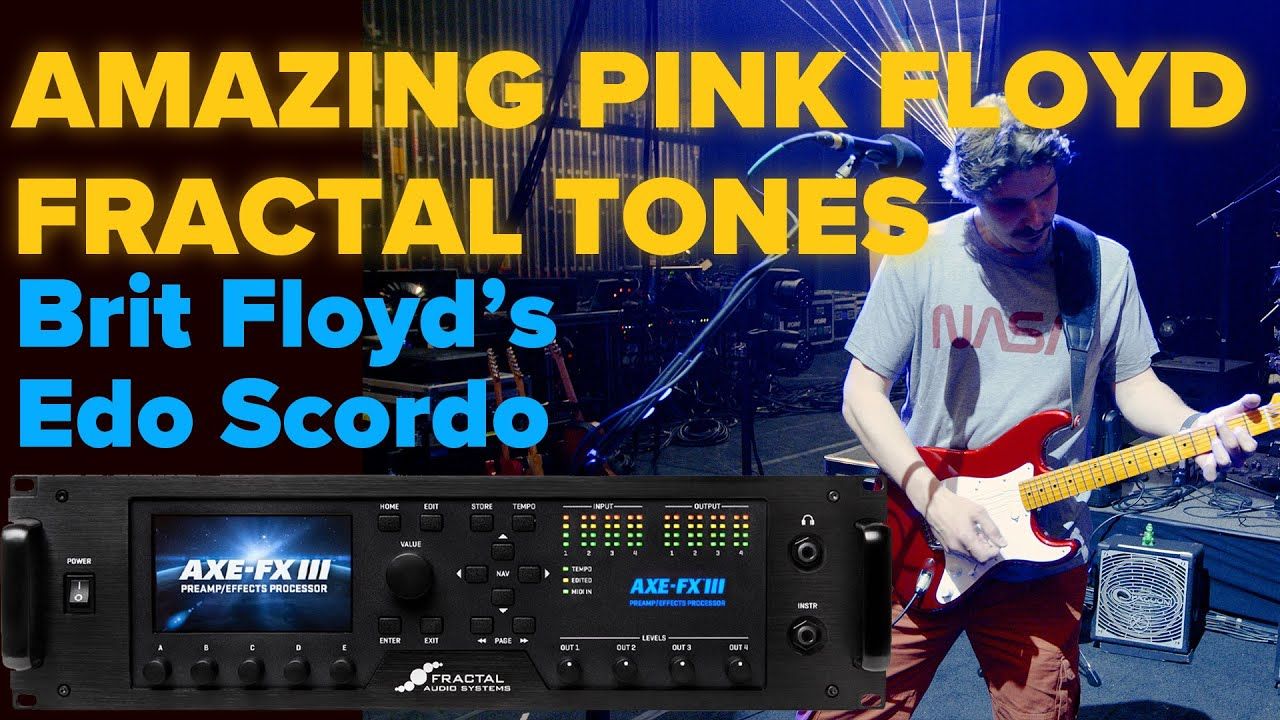
Pink Floyd Guitar Tone - Fractal Tour with Brit Floyd's Edo Scordo
"I try to take advantage of the new features of the new firmwares. ”
Mastering David Gilmour's Sound with Fractal Audio
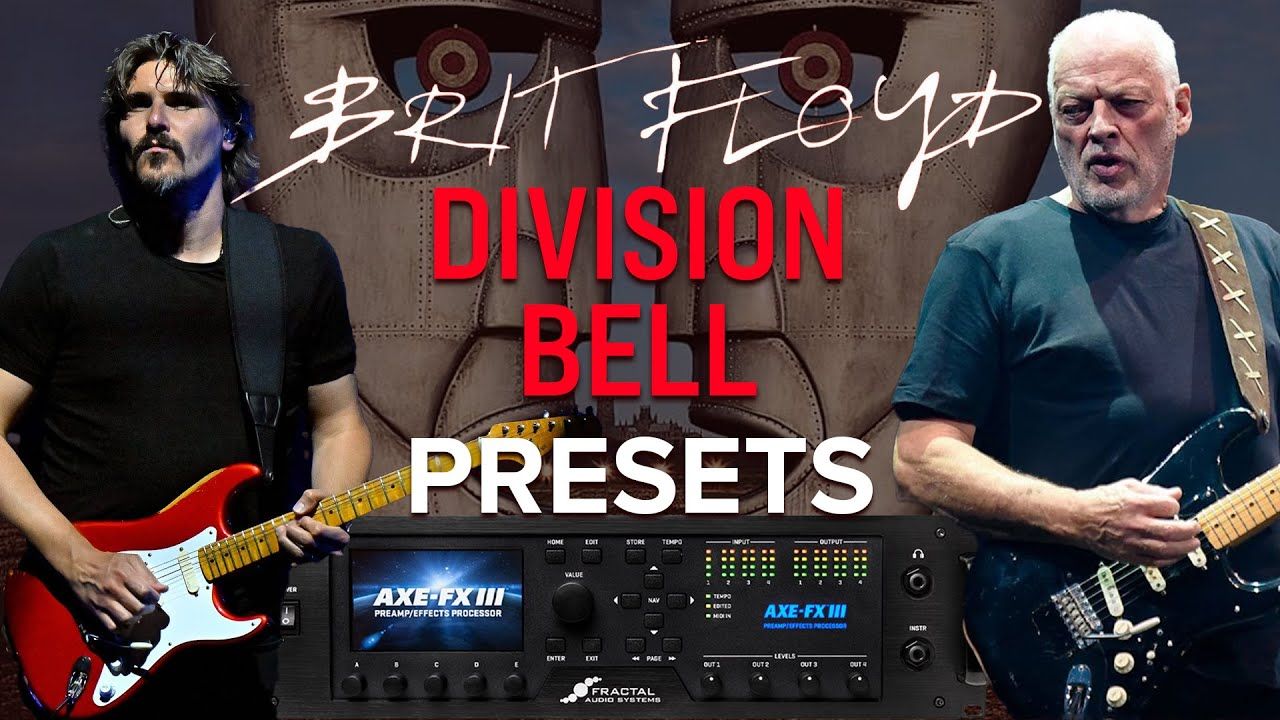
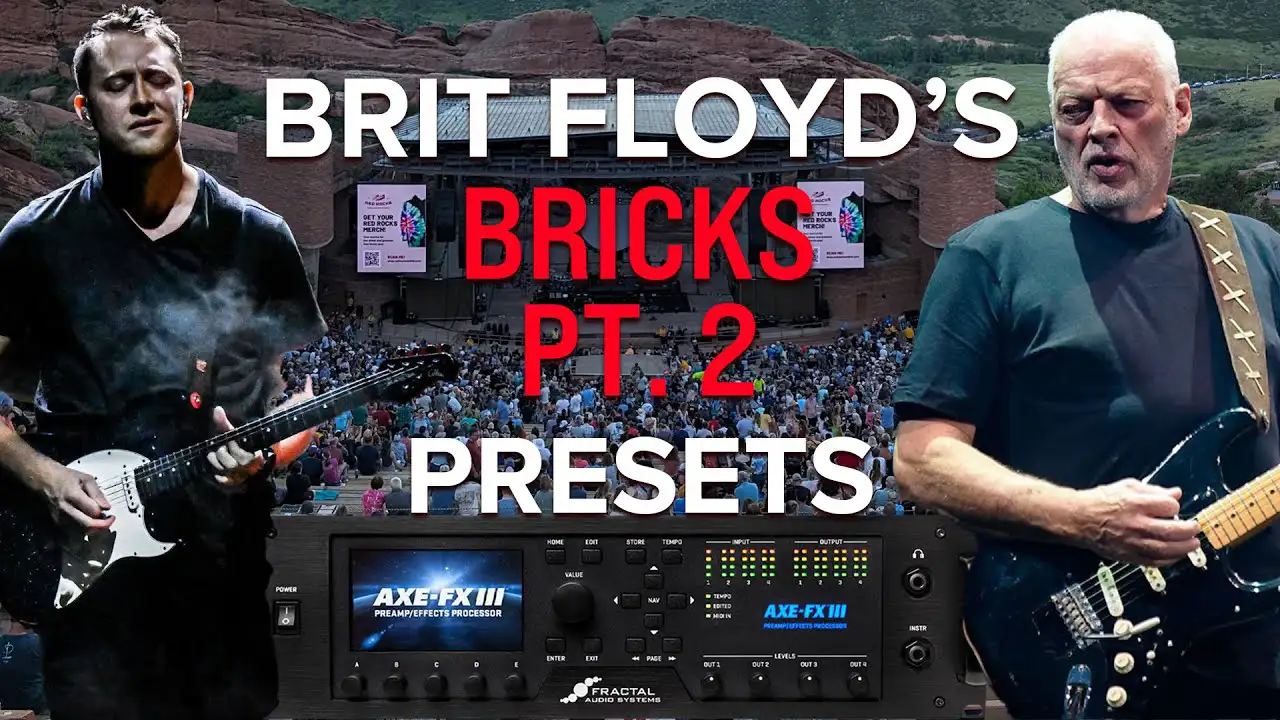
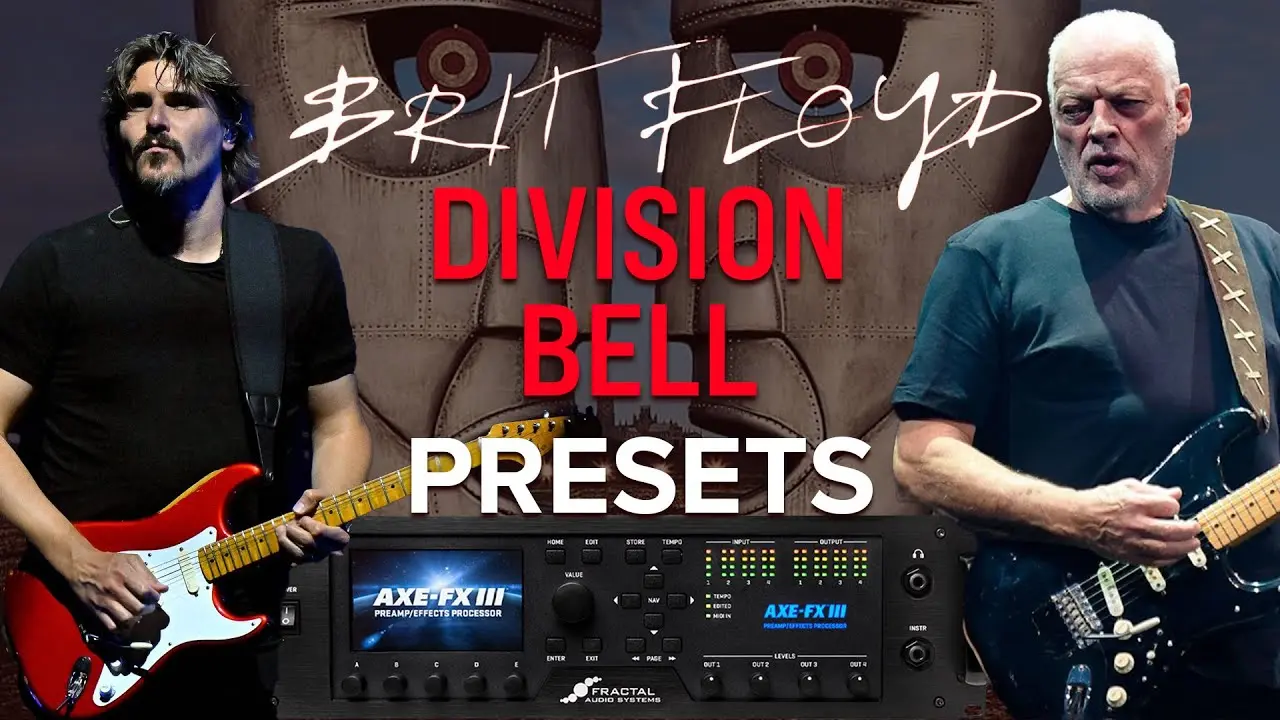
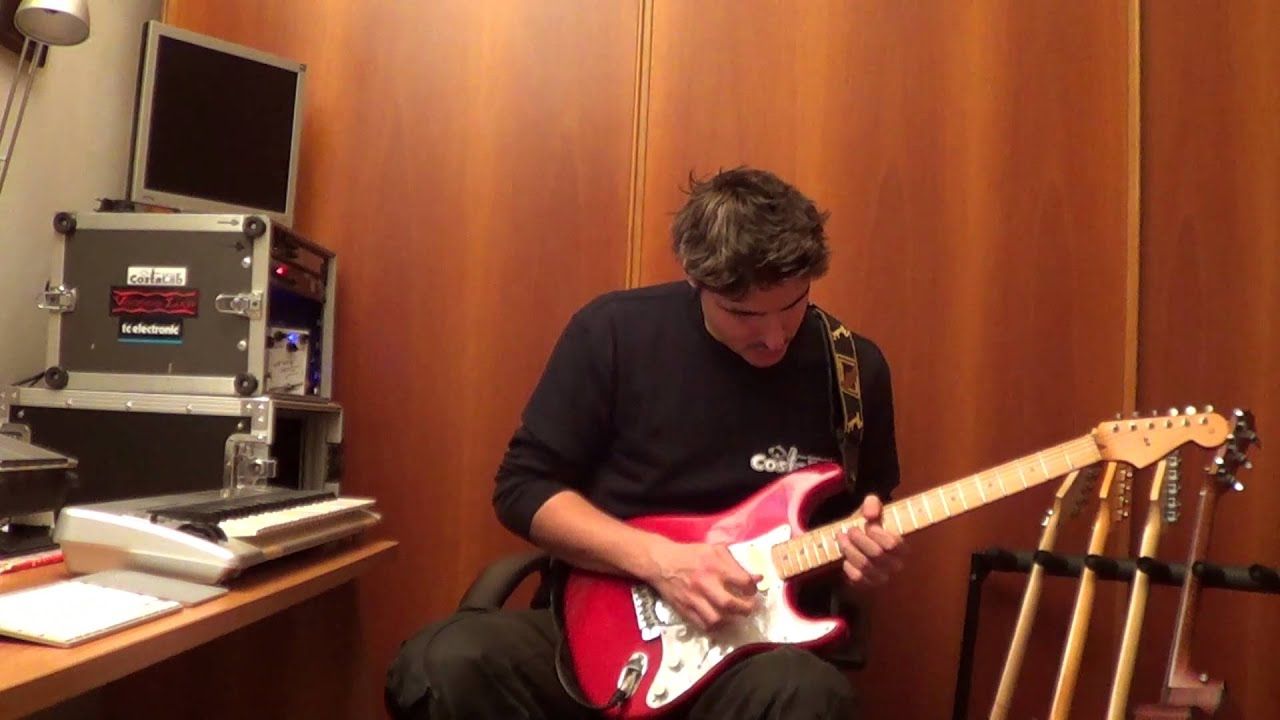
In the vast and storied world of tribute bands, Brit Floyd stands as a titan, revered for their unwavering commitment to capturing the essence of Pink Floyd’s iconic sound. Their performances aren't just concerts; they are immersive experiences, transporting audiences back to the golden age of classic rock. At the epicenter of this sonic voyage is guitarist Edo Scordo, a true maestro whose remarkable ability to channel the legendary tones of David Gilmour has earned him widespread acclaim. In this exclusive feature, Edo collaborates with Cooper Carter to take us on a journey through his intricate setup at the legendary Red Rocks Amphitheater, where Brit Floyd commemorates the 30th anniversary of "The Division Bell". Together, they unveil the secrets behind Edo's mastery of tone, showcasing how he harnesses the power of the Fractal Audio Axe-Fx III to meticulously craft his signature sounds.
In this article, we will dive deep into three specific Pink Floyd presets Edo uses live, revealing the exact settings and techniques he employs to bring this track to life. Scroll to the top and click the top image to watch the Tone Tour video and do check out the complete Brit Floyd Tone Tour Series.
Preset Download
Download Edo's "Keep Talking" Division Bell presets Important: Review all assigned modifiers before using this preset. If you don't have a pedal connected, adjust or bypass relevant blocks (e.g., Volume, Wah). Use the Modifier Overview in the Controllers menu to see all assigned modifiers at a glance | Download |
Fractal Audio - Axe-Fx III, FM9 & FM3
Overview
- Tone Tour Video
Scroll to the top and click the top image to watch the Tone Tour video - Edo Scordo
- David Gilmour's Gear
- Tone Breakdown
- Socials and more on Edo Scordo
Edoardo Scordo: The Sonic Architect of Gilmour’s Legacy
Edo Scordo is a true architect of tone. Recreating the timeless tones of David Gilmour is both an art and a science, and Edo Scordo’s approach seamlessly blends both disciplines. His dedication to replicating the lush, complex soundscapes of Pink Floyd is nothing short of extraordinary. With an almost obsessive attention to detail, Edo ensures that every note, every swell of the delay, and every ethereal reverb stays true to Gilmour’s original work. But what sets Edo apart is his relentless pursuit of perfection. Each year, he doesn't simply rely on tried-and-true settings; instead, he reinvents his sound, integrating the latest advancements in Fractal Audio’s cutting-edge firmware. This constant evolution allows him to push the boundaries of what’s possible, bringing him ever closer to the holy grail of Gilmour’s legendary tone.
While “Keep Talking” is our primary focus in this article, with the complete Brit Floyd Tone Tour below, you’ll be equipped with the knowledge and tools to start shaping your own Gilmour-inspired tones, mastering the art and science of sound just like Edo Scordo. Also make sure to check out the follwing websites to get ever so closer to understanding Pink Floyd's guitar sound.
gilmourish – David Gilmour tone resource
David Gilmour's Guitar Gear, Pedalboard & Equipment | Equipboard
Where it all started for Edo: Pink Floyd Marooned
YouTube service required
to load this video.
YouTube service required
to load this video.
YouTube service required
to load this video.
YouTube service required
to load this video.
Brit Floyd Pulse Tour 2024 - Current Lineup
- Damian Darlington: Guitarist, Vocalist and Musical Director
- Edo Scordo: Guitars, Vocals
- Ian Cattell: Vocals, Bass
- Further Members: Gareth Darlington, Bryan Kolupski, Matt Riddle, Ian Cattell, Arran Ahmun, Eva Avila, Jenn Kee, Ryan Saranich, Andrea Pellegrini, Robyn Cage, Ella Chi, Randy Cooke
The Complete Brit Floyd Tone Tour
David Gilmour’s Gear: Recreate the Pink Floyd Experience with Fractal Audio
David Gilmour’s guitar work with Pink Floyd is the stuff of legend, and his live tones are a benchmark for guitarists seeking that perfect blend of clarity, depth, and emotion. From the haunting beauty of “Echoes” to the raw power of “Run Like Hell", or the lush, swirling textures of “Shine On You Crazy Diamond,” Gilmour’s sound is a testament to the power of carefully chosen gear. Now, with Fractal Audio’s Axe-Fx III, FM9, and FM3, you can tap into this sonic legacy like never before. From the towering clean tones of the Hiwatt DR103 to the creamy overdrive of the BK Butler Tube Driver, every detail has been meticulously modeled, offering you the tools to not just replicate, but refine and innovate on Gilmour’s iconic soundscapes.
In the following sections, we’ll dive into some of the key effects and gear modeled in the Fractal Audio Axe-Fx III, FM9, and FM3, tweak the settings, and bring the spirit of Pink Floyd to your own performances.
Hiwatt DR103 Custom Head
Channel the iconic power and precision of David Gilmour’s live rig with the Hiwatt DR103, perfectly captured in the Fractal Audio Axe-Fx III, FM9, and FM3 as Hipower Brilliant, Hipower Normal, and Hipower Jumped. It’s like plugging into the very amp that defined Gilmour’s legendary tone. But here’s the kicker: with Fractal’s endless tweakability, you’re not just replicating history - you’re reinventing it, crafting your own masterpiece from a rock legend’s foundation.
Fender Twin Reverb
David Gilmour famously used a Fender Twin Reverb during the Pulse tour, specifically for its rich, clean tones that complement his more overdriven sounds. The Fractal Audio models this classic amp with the Double Verb model, which perfectly captures the sparkling highs and deep lows that made the Twin Reverb a go-to for Gilmour. Whether you're after that pristine clean tone or want to push it with some drive, the Double Verb model gives you all the flexibility you need to recreate those iconic Gilmour sounds.
WEM Super Starfinder 200
The 4x12 STARFOUND MIX (TAF) model in the Fractal Axe-Fx III, FM9, and FM3 brings the legendary WEM Super Starfinder 200 cabinet to life, faithfully capturing its rich, full-bodied tone. This cabinet, loaded with custom Fane speakers, was a cornerstone of David Gilmour's setup during the Pulse tour. When paired with the Hipower (Hiwatt) or Double Verb (Fender Twin Reverb) models, it delivers the powerful, clear sound that defined Gilmour’s live performances, making it an essential component for replicating his iconic tones.
BK Butler 911 Tube Driver
David Gilmour’s signature overdrive sound often relied on the Chandler Tube Driver. BK Butler is the original designer of the Tube Driver, and after his split with Chandler, he continued producing and refining the pedal under his own name. The Butler Tube Driver is often considered the "authentic" version, directly from the designer, with his oversight on quality and component selection - and yes, you guessed it, it's available in both 3-Knob and 4-Knob versions in the Fractal Audio units. The 3-Knob version offers a brighter tone with manageable gain, perfect for bluesy leads, while the 4-Knob version provides more tonal flexibility, true to the original’s design. Both models are essential for recreating Gilmour's smooth, saturated overdrive tones, giving you the flexibility to dial in everything from subtle warmth to searing lead tones.
Big Muff Pi (Triangle)
The Pi Fuzz model in the Fractal Audio Multi-FX unit is based on the original Triangle version of the Electro-Harmonix Big Muff Pi, the fuzz pedal that gave David Gilmour his legendary "Comfortably Numb" tone. Known for its rich, creamy sustain and dark, smooth fuzz, this pedal is less spitty than other fuzzes, making it ideal for use with a clean amp. In the Axe-Fx III, the Pi Fuzz allows you to dial in those iconic tones, with added flexibility to ensure you cut through the mix.
ProCo RAT II
Born from a happy accident in a Kalamazoo basement, the ProCo RAT has been the secret weapon for guitar legends like David Gilmour, Kurt Cobain, and Jeff Beck. The RAT is famous for its raw, aggressive tone, delivering everything from crunchy overdrive to full-on, face-melting distortion.
In the Fractal, the Rat Dist model faithfully captures this iconic sound, allowing you to harness the same power that Gilmour used to add bite to the Pink Floyd performances. Whether you’re looking to recreate the gritty tones of the 1980s or push your sound into new territory, the RAT is a pedal that demands to be heard.
EHX Electric Mistress
The Electric Mystery in the Fractal unit is your gateway to achieving the rich, swirling flanger effects that defined David Gilmour’s sound on tracks like "Shine On You Crazy Diamond" and "Dogs." This effect was crucial in adding depth and a three-dimensional quality to Gilmour’s guitar tones, making them feel expansive and ethereal.
With the Electric Mystery model, you can explore the full range of modulation that made the Electric Mistress a favorite among guitarists. From subtle, chorus-like textures to full-on jet swooshes, this flanger delivers everything you need to capture those iconic sounds.
Boss CE-2 Chorus
Gilmour relied heavily on the Boss CE-2 Chorus during the Pulse tour to add depth and richness to his sound. The Japan CE-2 in the Fractal is modeled after the Boss CE-2, capturing the lush, swirling modulation that the CE-2 is known for. Whether used subtly or as a more prominent effect, this chorus plays a crucial role in shaping the ambient, expansive tones.
TC 2290 Digital Delay
The TC 2290 is of course included in David Gilmour’s delay setup during the Pulse tour. This piece of gear crafted the expansive, rhythmic delays that added depth and dimension to Pink Floyd's songs. The 2290 w/ Modulation model in the Fractal Multi-FX unit faithfully captures these characteristics, making it ideal for those who want to recreate the detailed, spatial effects that defined Gilmour’s live sound.
Edo Scordo - A Great Day For Freedom
YouTube service required
to load this video.
YouTube service required
to load this video.
Tone Breakdown - Pink Floyd Presets
At the core of Brit Floyd's rig lies the Fractal Audio Axe-Fx III, a powerhouse of digital modeling that is an instrument of limitless potential. Every preset in Edo Scordo’s Axe-Fx III rig is a precise, modern reimagining that takes these legendary sounds to the next level. With the Fractal Audio Axe-Fx III, Edo doesn’t merely replicate Gilmour’s iconic tones; he enhances them, delivering unparalleled precision and clarity that only this cutting-edge digital modeling technology can offer.
But this article isn’t just about admiring Edo’s incredible sound—it’s about learning how to recreate it yourself. From the smooth, saturated overdrive that makes the lead guitar sing, to the perfectly timed delays and expansive reverbs that add depth and dimension, you’ll gain detailed insights into how to achieve these tones on your own Axe-Fx III, FM9, or FM3. Let’s delve into the specifics of Edo’s setup and explore the key presets that allow him to bring the music of Pink Floyd to life with breathtaking authenticity.
Edo's Live Sounds - Learning to Fly
Learning to Fly - Crunch Rhythm and Soaring Leads
- Crunch Rhythm Tone: "I've got this wonderful crunchy rhythm that I basically use just for rhythm," Edo explains at2:47, highlighting the punchy character of this preset.
- Solo Lead: For the solo sections, Edo switches to a lead preset that emphasizes clarity and sustain, ensuring his playing cuts through with precision. "Then I have a tiny little solo lead part in 'Learning to Fly,'" he adds at3:07.
Edo's Live Sounds - Coming Back to Life
Coming Back to Life - Pulse-Perfect Tones
- Favorite Patch: "This is my favorite patch of this set because it's 'Coming Back to Life.' We are doing the Pulse version, and I'm particularly proud of how it came out," Edo remarks at4:14. The patch is a masterclass in tone crafting, featuring both clean and lead sounds that transition seamlessly.
- Lead Tones: Edo uses two distinct lead presets for the song’s solos. The first is clean and smooth, while the second ramps up the aggression. "I have two different leads—one for the first solo, which is cleaner, and the second one is a little more aggressive," he explains at5:30.
Edo's Live Sounds - Shine On You Crazy Diamond
Shine On You Crazy Diamond - Crafting a Classic
- Clean Intro: "We're playing the Pulse version of 'Shine On' this year, so my sounds are completely different from what I'm used to," Edo reveals at6:52. The intro features a pristine clean tone, augmented by three different delay effects that add a rich, atmospheric depth.
- Lead Sound: Edo's lead sound for this track is equally impressive, utilizing a complex signal chain to replicate the spacious, echoing quality of Gilmour’s live tone. "For this sound, I think I'm using three different delays just for this," Edo notes at8:04.
Edo's Live Sounds - Hey You
Hey You - From Subtle to Seismic
- Rhythm Sound: "Hey You, I do almost nothing; I’m basically waiting outside until the solo comes," Edo says at8:12. The rhythm tone, however, is anything but passive, delivering a gritty, distorted sound that punctuates the song's dramatic arc.
Edo's Live Sounds - One of These Days
One of These Days - Pitch Shifter Power
- Pitch Shifter Control: "I'm using an expression pedal to control a pitch shifter, so when the heavy chords come in, the guitar goes down to a G and back to an A," Edo demonstrates at10:03, highlighting the creative possibilities of his setup.
Edo's Live Sounds - Money
Money - From Tremolo to Dry Lead
- Tremolo Effect: "Money starts with this tremolo sound," Edo points out at 10:57, using the effect to create the song's distinctive rhythmic pulse.
- Lead Tones: The first lead tone in "Money" is rich with delay and reverb, creating a spacious sound that envelops the listener. However, Edo then switches to a dry lead tone, stripping away the effects to deliver a raw, powerful solo. "We go to a dry lead—no delay, no reverb," Edo explains at 11:34.
How to Achieve the Iconic Pink Floyd Sound - "Keep Talking" Intro Preset
The intro to "Keep Talking" is a quintessential Gilmour moment - clean, spacious, and dripping with atmosphere. Recreating this tone requires more than just the right gear; it demands an understanding of how to blend compression, modulation, and reverb to build a sound that’s as expansive as it is precise. We’re here to show you how to make it your own.
In the following chapter, we'll walk you through how to achieve this sound step by step, breaking down the signal chain, effects settings, and amp configurations.
Crafting the "Keep Talking" Intro Tone
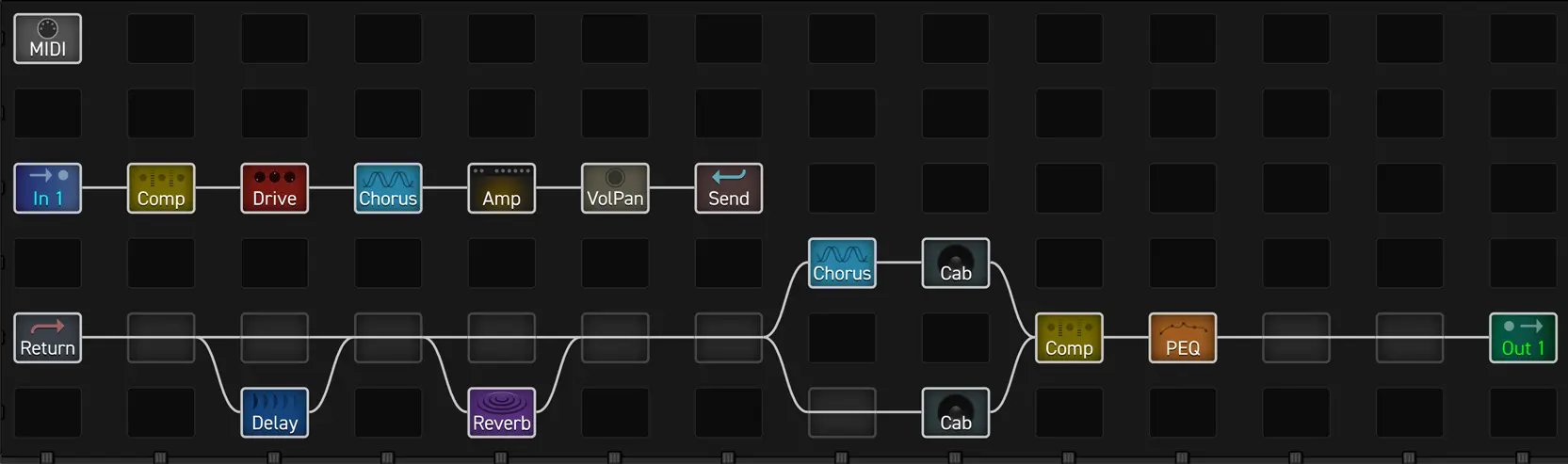
To recreate the iconic "Keep Talking" intro tone, the signal chain in Edo Scordo’s preset begins with Compressor 1, set to Dynamic Comp mode. What makes this compressor stand out is its fast attack and extended release times, allowing the initial transient of the guitar pick to come through crisply, while still holding onto the note’s body.
Next, the signal flows into the Tube Drive 4-Knob, a subtle drive block that adds just enough warmth to give the clean tone a bit of character without pushing it into distortion territory. The drive block is modelled after the "Butler Tube Driver" and with the 4-Knob, the EQ can be adjusted in Hi and Low. This is crucial for keeping the tone rich and full-bodied, capturing the essence of Gilmour’s clean sound.
The Chorus 1 block "Japan CE-2", modeled after the Boss CE-2, introduces the lush modulation that’s synonymous with Gilmour’s playing. The chorus effect widens the stereo image and adds a gentle, swirling motion to the sound, creating that spacious, almost ethereal quality that defines the intro.
At the heart of the tone is the Hipower Brilliant amp model (Hiwatt DR103), which fits right into Gilmour's Gear. This amp is set to deliver a clean, articulate tone with enough presence to ensure the guitar cuts through the mix without sounding brittle.
The signal is then split for parallel processing. One split goes through a 2290 w/ Modulation Delay, adding depth and dimension with a 450ms delay time that subtly repeats the signal, giving the sound a trailing echo that enhances its atmospheric quality. The next split passes through a Sun Plate Reverb block, which simulates the natural acoustics of a large space, adding a lush, expansive reverb tail that makes the tone feel larger than life.
The cabs are split into two paths with same cabinet blocks but a separate chorus effect on the left cab to create a wide stereo image. Edo does this with probably all of his presets.
Finally, the signal is polished with Compressor 2, a Studio FF Compressor. This compressor glues the entire tone together, ensuring that it remains cohesive and sits perfectly in the mix. The last touch comes from the Parametric EQ (PEQ), which fine-tunes the frequency response, carving out any unwanted frequencies and enhancing the overall clarity of the tone.
By carefully balancing these elements, you should be able to perfectly capture the spacious, atmospheric quality of David Gilmour’s "Keep Talking" intro, providing a versatile foundation for live performances or studio recordings.
Amp Settings
Amp Model: Hipower Brilliant
The Hipower Brilliant amp model is at the heart of this tone, offering a clear and articulate response that’s perfect for clean, dynamic playing. The tonestack frequency is a powerful tool which Edo uses often.
- Gain: 5.00
- Bass: 5.00
- Mid: 6.81
- Treble: 4.15
- Presence: 2.55
- Bright Switch: On
- Cut: On
- Master Volume: 7.00
- Level: -22.0 dB
- Tonestack Freq: 700 Hz
Cab Settings
Cabinet: 4x12 STARFOUND MIX (TAF)
The stereo cabinet setup splits the signal into two paths, each utilizing the same cabinet block. The left path incorporates additional chorus modulation, creating a wide, immersive stereo image.
- Left Path:
- Chorus 2 (Japan CE-2): Further modulation for stereo effect.
- Settings:
- Rate: 0.400 Hz
- Depth: 70.0%
- Delay Time: 20.00 ms
- Mix: 50.0%
- Settings:
- Cabinet (4x12 STARFOUND MIX (TAF)): First cabinet is panned fully left.
- Chorus 2 (Japan CE-2): Further modulation for stereo effect.
- Right Path:
- Cabinet (4x12 STARFOUND MIX (TAF)): Second cabinet is panned fully right.
This stereo configuration is crucial for achieving the spacious, almost three-dimensional sound that characterizes the Brit Floyd sounds.
The signals from both paths are then merged back together.
"The icing on the cake that is this preset though really comes in what Edo has done with the chorusing and the cabinets. You'll notice there are two cabinet blocks. They are exactly the same; they use the same IR except for the fact that they are hard panned. So, this first cabinet is panned fully left, the second cabinet is panned fully right. And what that allows Edo to then do is put this chorus pedal here only on the left side of the stereo image to really widen out the sound just in a massive way that makes it sound absolutely perfect for the Pulse intro."
Effects in front of Amp
Compressor 1 (Dynamic Comp)
The first effect in the chain is a compressor, designed to ensure a smooth dynamic range while adding a touch of sustain to the clean tone.
- Compression: 4.00
- Attack Time: 0.448 ms
- Release Time: 1399.9 ms
- Mix: 100%
- Level: -4.00 dB
Drive 1 (Tube Drive 4-Knob)
Next up is the drive block, set to add warmth rather than distortion, which enhances the clean tone with a subtle edge.
- Gain: 1.00
- Bass: 4.36
- Treble: 6.37
- Mix: 100%
- Level: 6.14 dB
Chorus 1 (Japan CE-2)
The chorus effect is essential for achieving that classic Gilmour modulation, adding a lush, wide sound that’s both smooth and expansive.
- Rate: 0.389 Hz
- Depth: 70.7%
- Delay Time: 20.00 ms
- Mix: 20.0%
- Stereo Spread: 100.0%
Effects after the Amp
Delay 1 (2290 w/ Modulation)
Delay is used to add depth and space, giving the tone a subtle echo that enhances its overall ambiance.
- Time: 450 ms
- Feedback: 50.0%
- Mix: 35%
- Level: -5.5 dB
Reverb 1 (Sun Plate)
To mimic the natural acoustics of a large concert hall, a plate reverb is used, adding a lush, expansive quality to the tone.
- Time: 4.00 sec
- Size: 44.0
- Mix: 100%
- Level: -7.0 dB
- Spread: 95.0%
Effects after the Cabinets
Compressor 2 (Studio FF Compressor)
A second compression stage ensures that the tone remains cohesive and sits well in the mix, providing a final layer of polish.
- Threshold: -30.3 dB
- Ratio: 2.996
- Attack Time: 12.989 ms
- Release Time: 100.00 ms
- Mix: 100%
- Level: 3.00 dB
Parametric EQ 1 (PEQ)
The PEQ is the final step in the chain, fine-tuning the overall tone by cutting unwanted frequencies and enhancing clarity.
- Frequency 1: 200.00 Hz; Gain 1: -2.00 dB (Shelving)
- Level: 0.00 dB
YouTube service required
to load this video.
YouTube service required
to load this video.
2. Preset Two - The Big Lead Tone
Lead Tone - Signal Chain
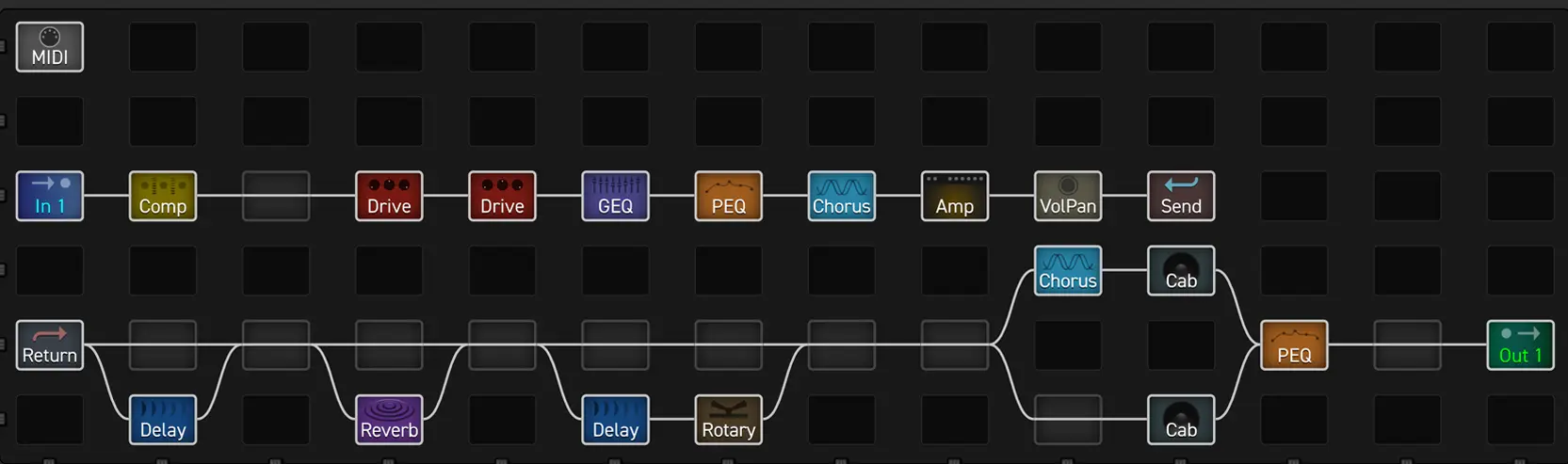
This preset is all about blending warmth with clarity, driving your tone through a carefully crafted signal chain that’s as versatile as it is powerful. We kick things off with a Pedal Compressor set to "Pedal Compressor 1" on Channel A. It’s dialed in with a compression ratio of 4.00, an attack time of 6.400 ms, and a release time of 100 ms. The settings ensure that your playing stays punchy and articulate, adding sustain and evening out dynamics without squashing the natural feel of your tone.
Next, we step into gain territory with two Drive blocks. The first is a Tube Drive 4-Knob, also on Channel A, offering that unmistakable vintage tube saturation. With a gain set at 2.14, bass at 7.86, and treble at 4.18, this drive block brings a smooth, harmonically rich overdrive that’s ideal for rhythm work and lead lines needing just a touch of edge. The second Drive block is the ever-aggressive Rat Distortion on Channel A. Known for its snarling, cutting distortion and prominent midrange, this block is set with a distortion level of 4.00 and a filter at 6.30, giving you that iconic Rat sound, perfect for solos or when you need to cut through a dense mix.
The Amp block is where things get particularly interesting. We’re using the Hipower Brilliant model, which pays homage to the classic Hiwatt amps. The tonestack is specifically tailored, featuring a bright switch to enhance the upper frequencies and bring out that signature clarity. The preamp section is driven by ECC83 tubes, delivering that sought-after tube warmth and saturation. The tonestack is set to "516.6 Hz" and "Mid," allowing for a balanced midrange that’s neither too scooped nor too prominent, perfect for a wide range of playing styles.
After the Return block, the signal flows into a 2290 W/Modulation Delay block. Set at 450 ms with a master feedback of 48%, this delay adds a lush, ambient layer to your tone. It’s subtle yet effective, enhancing your sound without overwhelming it. Next up is a Studio Reverb block, with a 2.50-second decay time and a high cut frequency at 3794.4 Hz, which creates a spacious and warm reverb tail, perfect for adding depth without muddying up the tone. Finally, the signal hits a Rotary block to add that classic swirling effect, giving your sound a three-dimensional movement reminiscent of a Leslie speaker. This rotary effect is finely tuned with a slow rate for a subtle, musical modulation, making it ideal for adding texture to both clean and overdriven tones alike.
Amp Settings
Amp - Hipower Brilliant
This amp block is the centerpiece of your tone, modeled after the legendary Hiwatt. The settings are dialed in for clarity and punch, with a tonestack frequency that delivers a balanced midrange, making it versatile across various genres. The bright switch is turned on, the cut is turned off.
- Type: Hipower Brilliant
- Gain: 5.50
- Bass: 3.40
- Mid: 4.50
- Treble: 3.56
- Presence: 5.02
- Depth: 0.00
- Master Volume: 7.00
- Level: -16.0 dB
- Bright Switch: On
- Cut: Off
- Tonestack Freq: 516.6 Hz
Cab Settings
The signal chain splits after the time effects into two paths for a stereo cab selection (see signal chain).
Stereo Cab Path: Simulates speaker cabinet. See Preset 1.
- The cabinet block is configured like in the previous preset, with one cabinet panned fully left and the other panned fully right. The left path includes a chorus effect to widen the stereo image.
The signals from both paths are then merged back together.
Effects in front of the Amp
Compressor (Pedal Compressor 1)
The compressor is meticulously set to smooth out your dynamics, providing consistent sustain while retaining the attack of your pick. It’s tuned with a fast attack and a moderate release, ensuring it reacts quickly to your playing without feeling too heavy-handed, keeping your tone crisp and lively.
- Type: Pedal Compressor 1
- Compression: 4.00
- Attack Time: 6.400 ms
- Release Time: 100 ms
- Look-Ahead Time: 0 ms
- Mix: 100%
- Level: 4.00 dB
Drive 1 (Tube Drive 4-Knob)
This drive block is all about recreating the warm, smooth overdrive of a vintage tube amp. The settings are fine-tuned to boost the low-end and midrange slightly, creating a thick and creamy tone that cuts through the mix but still maintains that essential warmth.
- Type: Tube Drive 4-Knob
- Gain: 2.14
- Bass: 7.86
- Treble: 4.18
- Mix: 100%
- Level: 6.20 dB
- Tone Settings:
- Mid Frequency: 636.0 Hz
- Mid: 5.00
- High Mid: 4.10
- Low Cut: 461.63 Hz
- High Cut: 7785.5 Hz
Drive 2 (Rat Distortion)
On top of the Tube Driver, the Rat Distortion brings its trademark grit and midrange presence. With distortion set at 4.00 and the filter at 6.30, this block delivers a thick, aggressive tone that’s perfect for heavier genres, adding just the right amount of bite to your leads.
- Type: Rat Distortion
- Distortion: 4.00
- Filter: 6.30
- Mix: 100%
- Level: 6.12 dB
- Tone Settings:
- Bass: 5.00
- Mid: 5.00
- Mid Frequency: 600.0 Hz
- High Mid: 5.26
- Low Cut: 20.00 Hz
- High Cut: 7848.2 Hz
Effects after the Amp
The following effects are set in parallel (see signal chain).
Delay 1 (2290 W/ Modulation)
The first delay block adds a rich, ambient echo with just a touch of modulation to give the repeats a slight, organic movement. The 450 ms delay time is perfect for solos, creating a lush soundscape without overwhelming the dry signal. The right post delay adds a subtle stereo widening effect, making your tone more expansive.
- Type: 2290 W/ Modulation
- Time: 450 ms
- Tempo: None (free-running)
- Master Time: 100%
- Feedback: 48.0%
- Right Post Delay: 17.9 ms
- Master Feedback: 100%
- Echo Pan: 0.0
- Mix: 100%
- Level: -8.0 dB
- Balance: 0.0
- Bypass Mode: Mute Out
Reverb (Studio)
This Studio Reverb is all about creating space. The long decay time and high cut frequency are dialed in to produce a reverb that adds depth and dimension without drowning out your tone. It’s warm, lush, and designed to blend seamlessly with your dry signal, enhancing the overall atmosphere of your playing.
- Type: Studio
- Time: 2.50 sec
- Size: 82.1
- Pre-Delay: 8.0 ms
- High Cut Frequency: 3794.4 Hz
- Crossover Frequency: 400.01 Hz
- Echo Density: 8 (Ultra-High Quality)
- Mix: 100%
- Level: -8.0 dB
- Balance: 0.0
- Spread: 100.0%
- Bypass Mode: Mute Out
Delay 2 (Digital Mono)
The second delay block is set to a very short delay, functioning almost like a slapback echo. It subtly thickens the tone, adding a sense of depth and presence without creating a noticeable echo. It’s an essential ingredient for adding body to your sound.
- Type: Digital Mono
- Time: 30 ms
- Tempo: None (free-running)
- Master Time: 100%
- Feedback: 1.0%
- Mix: 100%
- Level: 0.0 dB
- Balance: 0.0
- Bypass Mode: Mute Out
Rotary
The Rotary block is where the magic happens. It’s tuned to emulate the classic Leslie speaker sound, adding a swirling, three-dimensional quality to your tone. The slow rate and carefully set depth parameters make it perfect for adding texture and movement, whether you’re playing clean or overdriven passages.
- Type: Rotary
- Rate: 0.875 Hz
- Hi Depth: 13.4%
- High Level: -4.56 dB
- Hi Time Constant: 0.800 sec
- Rotor Length: 74.4%
- Mic Spacing: 100.0%
- Drive: 0.00
- Low Depth: 10.6%
- Low Time Constant: 2.000 sec
- Low Rate Mult: 2.186
- Mic Distance: 1.00
- Stereo Spread: 200.0%
- Mix: 100%
- Level: -14.0 dB
- Balance: 0.0
- Bypass Mode: Mute Out
Effects after the Cabinets
PEQ (Parametric EQ 1)
Finally, the PEQ block is your secret weapon for dialing in the perfect tonal balance. It’s set to tame any muddiness in the low mids and ensure the highs are smooth and articulate. Each frequency band is meticulously adjusted to shape your tone so it sits perfectly in the mix.
- Frequency 1: 370.17 Hz | Gain 1: -3.05 dB (Shelving)
- Frequency 2: 478.01 Hz | Gain 2: 5.14 dB (Peaking)
- Frequency 3: 600.01 Hz | Gain 3: -13.19 dB (Peaking)
- Frequency 4: 1219.1 Hz | Gain 4: 1.53 dB (Peaking)
- Frequency 5: 4406.1 Hz | Gain 5: -3.47 dB (Shelving)
- Level: 0.0 dB
YouTube service required
to load this video.
YouTube service required
to load this video.
3. Preset Three - The Riff Tone
Riff Tone - Signal Chain
This preset offers an impressive tone.
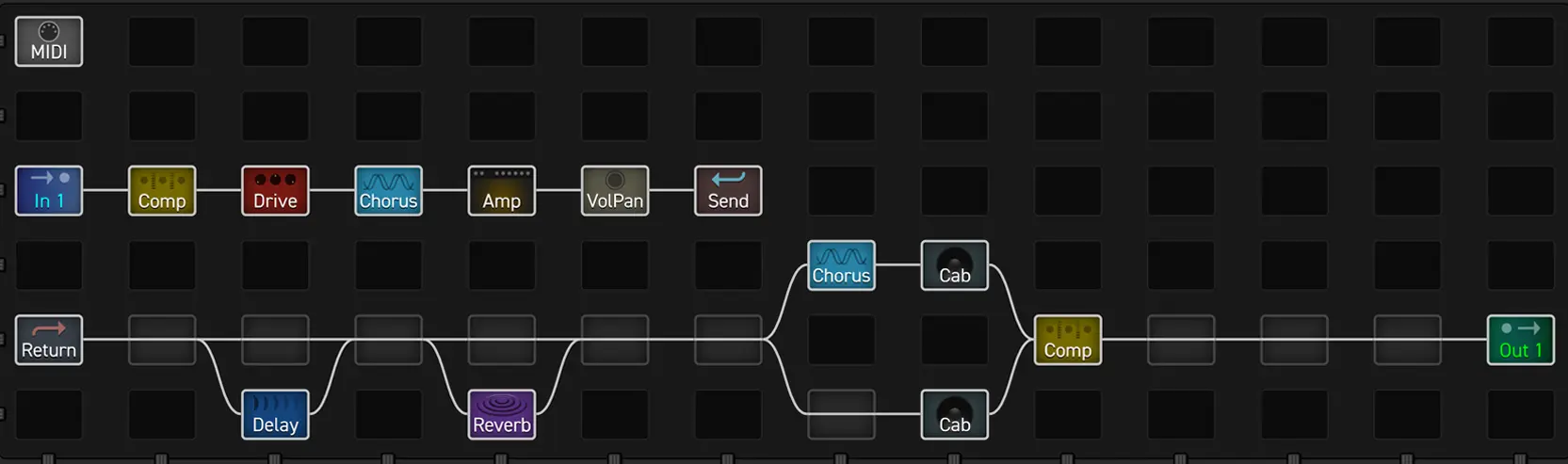
Compressor: The signal chain starts with a Pedal Compressor, dialed in to balance the dynamics of your playing while providing the necessary sustain. The compressor responds quickly, preserving the natural attack while keeping the volume consistent.
Drive: The first Drive block, a Tube Drive 4-Knob, adds subtle saturation to the signal. With reduced gain, this block provides a warm overdrive that’s ideal for classic rock sounds. The tone controls are set to create a full, harmonically rich sound that stands out without being overly aggressive.
Chorus: The Chorus, based on the Japan CE-2, adds depth and dimension to the tone. With a moderate mix and a high cut, this effect delivers a subtle, but noticeable shimmer that shines in clean settings and adds a pleasant width to slightly overdriven tones.
Amp: The heart of the preset is the Hipower Brilliant Amp. The settings are chosen to deliver a bright, present sound without sacrificing warmth. The Bright switch is engaged, emphasizing the highs and adding extra sparkle to the tone.
Delay: Next is a 2290 W/ Modulation Delay, appreciated for its clear, rhythmic echo effect. The delay is subtle enough not to overwhelm the signal but adds a pleasing depth that enhances solos and melodies.
Reverb: The Reverb block, set to the Sun Plate type, creates a wide, atmospheric soundscape. With a long decay time, this effect produces a large, enveloping sound, especially effective when combined with delay and chorus.
Compressor 2: At the end of the chain, a second compressor ensures that all the effects blend smoothly together, keeping the overall sound controlled and balanced. This Studio FF Compressor maintains clarity and dynamics, even when the effect intensity is turned up.
Amp Settings
Amp - Hipower Brilliant: Provides the main amplification and tone shaping.
- Type: Hipower Brilliant
- Gain: 5.50
- Bass: 3.14
- Mid: 4.00
- Treble: 7.97
- Presence: 6.91
- Master Volume: 7.00
- Bright Switch: On
- Level: -22.00 dB
- Tonestack Freq: 700 Hz
Cab Settings
Cabinet Block as in Preset 1.
Effects before the Amp
Compressor (Dynamicomp)
This compressor is set up to balance your dynamics, enhancing sustain without squashing your natural playing feel. The fast attack ensures your picking remains crisp, while the release is dialed in to keep your notes lively and full. It’s perfect for adding consistency without overpowering the core tone of your guitar.
- Type: Dynamicomp
- Compression: 4.00
- Attack Time: 0.448 ms
- Release Time: 1399.9 ms
- Look-Ahead Time: 0.000 ms
- Mix: 100%
- Level: -4.00 dB
Drive 1 (Tube Drive 4-Knob)
This drive block is tuned to deliver a classic tube overdrive with just the right amount of grit and warmth. The settings favor a balanced midrange boost, enhancing your overall tone with a subtle, smooth gain structure that cuts through the mix. It’s designed to provide a creamy, harmonically rich drive that stays articulate, making it ideal for both rhythm work and soaring leads.
- Type: Tube Drive 4-Knob
- Gain: 2.00
- Bass: 4.36
- Treble: 6.37
- Mix: 100%
- Level: 6.14 dB
- Tone Settings:
- Mid Frequency: 600.0 Hz
- Mid: 5.00
- High Mid: 5.00
- Low Cut: 718.77 Hz
- High Cut: 20000 Hz
Chorus (Japan CE-2)
The Chorus block is modeled after the iconic Boss CE-2, known for its lush, warm modulation that adds depth and character to your sound. This chorus is set up with a slow rate and deep modulation, creating a wide, enveloping sound that is perfect for clean and lightly overdriven tones. The settings are carefully adjusted to enhance the overall width without becoming too overpowering, allowing your main signal to remain prominent while adding a subtle shimmer.
- Type: Japan CE-2
- Rate: 0.389 Hz
- Depth: 70.7%
- Delay Time: 20.00 ms
- Number of Voices: 2
- Width: 0.0%
- Mix: 20.0%
- Level: 0.0 dB
- Balance: 0.0
- Stereo Spread: 100.0%
- Low Cut: 20.00 Hz
- High Cut: 8000.2 Hz
- Drive: 2.33
Effects before the Cabinets
- Delay (2290 W/ Modulation)
- Type: 2290 W/ Modulation
- Time: 450 ms
- Feedback: 40%
- Mix: 100%
- Level: -8.0 dB
- Reverb (Sun Plate)
- Type: Sun Plate
- Time: 3.00 sec
- Size: 44.0
- Pre-Delay: 38.2 ms
- Mix: 100%
- Level: -20.0 dB
- Spread: 95.0%
Effects after the Cabinets
- Compressor 2 (Studio FF Compressor)
- Type: Studio FF Compressor
- Threshold: -30.3 dB
- Ratio: 3.000
- Attack Time: 3.439 ms
- Release Time: 100.00 ms
- Mix: 100%
- Level: -1.00 dB
YouTube service required
to load this video.
YouTube service required
to load this video.
Conclusion: Craft Your Own Gilmour Magic with Fractal Audio
Edo Scordo’s deep dive into David Gilmour’s iconic tones is a masterclass in recreating one of rock’s most revered guitar sounds. Armed with the Fractal Audio Axe-Fx III, FM9, or FM3, you have the power to not only match Gilmour’s tones but to elevate them, adding your own twist on a legendary foundation. Whether you’re dialing in the haunting echoes of “Shine On You Crazy Diamond” or the gritty edge of “Dogs,” these Fractal models let you step directly into the soundscapes that defined a generation.
The beauty of these setups is their flexibility. You’re not locked into rigid presets; instead, you have the freedom to tweak, adjust, and experiment until the tone feels just right under your fingers. That’s the magic Gilmour brought to his playing—constantly evolving, never settling, and always pushing the boundaries of what his gear could do. With Fractal, you’re handed that same level of control and endless possibility.
So go ahead—explore those nuanced settings, embrace the ambient delays, and dig into the rich, textured overdrives. With the right touch and a little bit of creativity, you’re not just playing a Gilmour tone; you’re building your own sonic legacy. Plug in, turn up, and let the music take you somewhere new.
More on Edo Scordo
For more on Edo Scordo and his incredible work bringing the tones of David Gilmour to life, make sure to follow him online. Edo regularly shares his insights, gear tips, and behind-the-scenes content on his social media channels, giving fans an inside look at how he dials in those legendary sounds.
Follow Edo on his YouTube channel for exclusive videos, including rig rundowns, live performances with Brit Floyd, and tutorials that dive deep into his Fractal Audio settings. You can also keep up with his latest updates and gear insights by following him on Instagram and Facebook.
Stay connected and be inspired by one of the best in the business as Edo continues to explore the world of tone, performance, and all things Gilmour.
YouTube service required
to load this video.
YouTube service required
to load this video.
Tone Tours, Fractal Friday & Masterclass
For more insights on using the Axe-Fx III and other Fractal Audio Systems products, visit the Product Page, Fractal Audio Wiki, or Forum. To purchase your unit, head to our shop and for in-depth learning, check out Cooper Carter’s Complete Fractal Audio Master Class Series. Also check out more Artist Tone Tours.
More on Cooper Carter - Fractal Friday & Masterclass
For more on Cooper, check out his own Tone Tour 2023 below or visit our Fractal Friday Section for more videos and courses. Also make sure to follow Cooper online.
In addition to recording his popular Fractal Friday videos for G66, where he shares tips, tricks and insights into Artist tones, Cooper is the mastermind and presenter of the critically acclaimed online Masterclass education series for the FM3, FM9, and Axe-Fx. This invaluable resource, a gem for the Fractal community, is so beneficial that we include a $30 discount voucher with every modeller sold, ensuring effortless access for everyone to get the most out of their Fractal units.


About G66 UK
About Fractal Audio Systems